
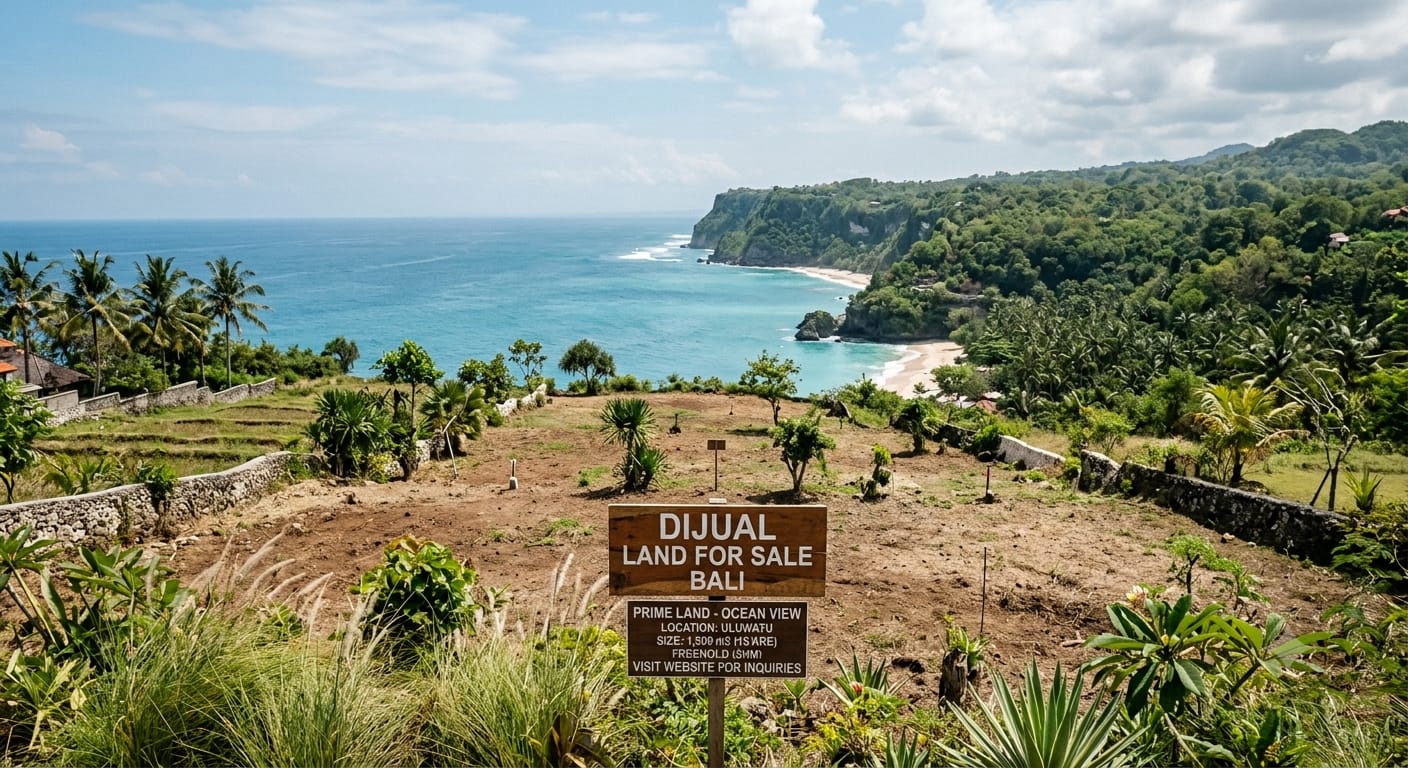
Bali is one of Indonesia’s most attractive destinations for property investment, with significant demand for land in areas such as Badung, Denpasar, Gianyar, Tabanan, and other parts of the island. Land is commonly purchased for residential properties, villas, tourism businesses, commercial developments, and long-term investment.
However, selling land in Bali involves more than simply finding a buyer and agreeing on a price. A land transaction must comply with Indonesian land law and may also involve zoning regulations, taxation, land registration requirements, and customary regulations that are particularly relevant in Bali.
1. Does Bali Have Special Regulations for Land Sales?
Land transactions in Bali are primarily governed by Indonesia’s national land laws. There is no single law that regulates all land sales specifically in Bali.
However, Bali has unique characteristics because transactions may also involve customary villages (Desa Adat), customary land, spatial planning regulations, and local customary practices.
One of the main foundations of Indonesian land law is Law No. 5 of 1960 concerning Basic Agrarian Principles (UUPA). This law remains an important legal foundation for land ownership and land rights in Indonesia.
In addition, Law No. 15 of 2023 concerning the Province of Bali recognizes the existence and role of customary villages and other traditional institutions in Bali.
Therefore, buyers and sellers should not only verify the land certificate but should also determine whether the land is connected to customary rights or subject to regulations applicable within the relevant customary village.
2. Important Regulations Related to Land Sales
Several regulations are particularly relevant when buying or selling land in Bali.
a. Law No. 5 of 1960 on Basic Agrarian Principles
Law No. 5 of 1960, commonly known as the Basic Agrarian Law (UUPA), is the main foundation of Indonesia’s land law.
It regulates several types of land rights, including:
-
Right of Ownership (Hak Milik)
-
Right of Cultivation (Hak Guna Usaha)
-
Right of Building (Hak Guna Bangunan)
-
Right of Use (Hak Pakai)
One important provision concerns Right of Ownership (Hak Milik). Under Article 21 of the UUPA, Hak Milik is generally reserved for Indonesian citizens.
This means that a foreign national cannot simply purchase Indonesian land with Hak Milik and register the ownership in their own name.
b. Government Regulation No. 18 of 2021
Government Regulation No. 18 of 2021 regulates Management Rights, Land Rights, Strata Titles, and Land Registration.
This regulation is important for land transactions because it provides rules concerning land rights, registration, and certain forms of property ownership, including regulations relevant to foreigners.
c. Government Regulation No. 24 of 1997 on Land Registration
Government Regulation No. 24 of 1997 is an important legal basis for Indonesia’s land registration system and has been amended by Government Regulation No. 18 of 2021.
For transactions involving registered land, the transfer of rights must be properly documented and registered through the relevant land administration process.
3. Spatial Planning Regulations in Bali
Another important consideration when buying or selling land in Bali is spatial planning.
Not every parcel of land can legally be used to construct a villa, hotel, restaurant, residential development, or other commercial facility.
Bali has provincial spatial planning regulations that determine the permitted use of land in different areas.
Before purchasing land for investment, buyers should therefore verify:
-
The zoning classification of the land.
-
Whether construction is permitted.
-
What type of development is allowed.
-
Applicable building restrictions.
-
Access and infrastructure requirements.
-
Whether the proposed business activity is compatible with the zoning regulations.
A parcel of land may have a valid certificate but still have restrictions on how it can be developed.
4. Customary Land and Desa Adat in Bali
One of the most important characteristics of land transactions in Bali is the existence of Desa Adat, or traditional/customary villages.
Bali has its own customary institutions and traditions that continue to play an important role in community life.
Certain land may have a relationship with customary communities or customary obligations. Therefore, a buyer should investigate whether the property is subject to any customary restrictions or obligations.
If a property is located within or connected to a Desa Adat, it may be advisable to obtain additional information from the relevant customary authorities, in addition to conducting the standard legal verification.
This is particularly important for buyers who intend to develop villas, tourism businesses, or other commercial properties.
5. Documents Required When Selling Land
Before putting land on the market, the owner should make sure that the relevant documents are complete and consistent.
Depending on the circumstances, these may include:
-
Original land certificate.
-
Identification documents of the registered owner.
-
Family documentation where required.
-
Property tax documents and payment records.
-
Documents proving how the land was acquired.
-
Inheritance documents, if applicable.
-
Marriage-related documents, where relevant.
-
Power of attorney, if the transaction is conducted through a representative.
-
Other supporting documents required by the PPAT or relevant authorities.
If the land is jointly owned or involves inheritance, all parties with legal rights or interests should be properly identified before the transaction proceeds.
6. How Does a Land Sale in Bali Work?
The general process of selling land may include the following steps.
Step 1: Verify the Land Documents
The first step is to verify the legal status of the property.
This may include checking:
-
The registered owner.
-
Type of land right.
-
Land area.
-
Land boundaries.
-
Certificate information.
-
Existing encumbrances or legal restrictions.
-
Potential disputes.
Step 2: Check the Spatial Planning Status
If the buyer intends to build a villa, hotel, restaurant, residence, or other business, the intended use should be checked against the applicable spatial planning regulations.
Step 3: Conduct a Physical Inspection
The physical condition of the property should also be inspected.
Important considerations include:
-
Road access.
-
Property boundaries.
-
Drainage.
-
Electricity and water availability.
-
Surrounding developments.
-
Accessibility to public infrastructure.
Step 4: Agree on the Purchase Price
Once the legal and physical aspects have been reviewed, the buyer and seller can negotiate and agree on the price and transaction terms.
Step 5: Prepare the Sale and Purchase Deed
The transfer of registered land rights generally involves a Pejabat Pembuat Akta Tanah (PPAT), or Land Deed Official.
The PPAT assists in preparing the relevant land deed and ensuring that the required legal and administrative conditions are satisfied.
Step 6: Pay Applicable Taxes and Transaction Costs
Land transactions may involve several taxes and administrative costs. The parties should determine their respective obligations before completing the transaction.
Step 7: Register the Transfer of Rights
After the transaction has been properly completed, the transfer of land rights must be registered with the relevant Land Office in accordance with applicable regulations.
7. Taxes on Land Transactions
Taxation is an important part of any land transaction in Bali.
For the seller, Government Regulation No. 34 of 2016 regulates Income Tax (PPh) on the transfer of rights over land and/or buildings. For certain transactions, the applicable final income tax rate is 2.5% of the gross transfer value.
For the buyer, Acquisition Duty of Rights on Land and Buildings (BPHTB) may apply.
Under Law No. 1 of 2022 concerning Financial Relations between the Central Government and Regional Governments, the maximum BPHTB rate is 5%, while the actual applicable rate is determined by the relevant regional regulation.
Because tax obligations may vary depending on the transaction and location, buyers and sellers should confirm the applicable taxes and payment procedures before completing the sale.
8. What If the Buyer Is a Foreign National?
Bali is a major international destination, and many foreign nationals are interested in acquiring property or investing in real estate.
However, foreigners must comply with Indonesian restrictions on land ownership.
A foreign national cannot simply purchase Hak Milik (Right of Ownership) land and register it in their own name. The applicable land-right structure must comply with Indonesian law.
Government Regulation No. 18 of 2021 provides regulations concerning land rights and certain forms of residential ownership available to foreigners, subject to the applicable requirements.
Therefore, transactions involving foreign buyers should be carefully structured with the assistance of a qualified PPAT and, where necessary, a legal professional experienced in Indonesian property law.
Buyers and sellers should also be cautious about informal nominee arrangements, where land is registered in the name of an Indonesian individual for the benefit of a foreign party. Such arrangements can create significant legal risks.
9. What Should Buyers Check Before Purchasing Land in Bali?
A low purchase price should not be the only consideration when buying land.
Potential buyers should investigate:
-
The authenticity and status of the land certificate.
-
The registered owner.
-
Land area and boundaries.
-
The history of ownership.
-
Inheritance issues, if applicable.
-
Existing disputes.
-
Mortgages or other encumbrances.
-
Legal access to the property.
-
Spatial planning and zoning.
-
Development restrictions.
-
Relationship with a Desa Adat, where relevant.
-
Property tax status.
-
Ownership issues arising from marriage or joint ownership.
-
Legal requirements applicable to foreign buyers or companies.
Thorough due diligence can help reduce the risk of purchasing land that cannot be used or developed as originally intended.
10. Tips for Selling Land Safely in Bali
Landowners who plan to sell property in Bali should consider the following steps.
First, make sure that all ownership documents are complete and that the information on the certificate matches the actual property.
Second, verify the legal status of the land before actively marketing it.
Third, establish a reasonable asking price based on location, size, accessibility, land status, and permitted use.
Fourth, avoid giving original documents to unknown or unauthorized parties. Original documents should generally remain under the control of the owner or relevant professional during the transaction process.
Fifth, avoid accepting or making substantial payments without clear written documentation.
Sixth, use a qualified PPAT for transactions and legal procedures that require PPAT involvement.
Seventh, if the land involves inheritance, marriage, multiple owners, customary land, or other legal complications, resolve these matters before completing the sale.